Preparing meetings
Compiling documents, structuring agenda items, preparing background knowledge.
In-person training in German for project managers and project-related PMO functions
One hands-on day. One complete project cycle. A working basis for your next working day.
You work on a continuous sample project from start to finish, accompanied by three experts in technology, project practice and business transformation, and you go home with a complete set of your own work results.
You work with your own laptop and ChatGPT or Claude on your own subscription.
This page describes the course in English for your information. The training day itself, including all input, exercises and discussions, is held in German. Please take this into account before registering.
Everyday project work
In many project teams, individual members already use ChatGPT, Copilot or Claude here and there. What is usually missing: a shared way of working, structured context, a clear data basis, repeatable routines, quality checks, clear responsibilities and integration into existing project management. This gap shows up again and again at the same points in everyday project work:
Compiling documents, structuring agenda items, preparing background knowledge.
Documenting decisions and discussions, often afterwards and under time pressure.
Keeping track of tasks, responsibilities and deadlines across several meetings.
Recording, assessing and continuously monitoring risks instead of listing them once.
Formulating objectives, constraints and scope so that everyone starts from the same understanding.
Regularly presenting the project status clearly for different audiences.
Condensing management information and preparing it for decision.
Pulling together what matters from different documents and channels and carrying knowledge over between project phases.
This is exactly the gap the hands-on day closes: AI is no longer used here and there, but turned in a structured way into a way of working that holds up in everyday project work. Responsibility, assessment and decisions remain with people.
The aim of the training
You do not learn individual prompts or the features of a particular AI tool. You learn how to deliberately simplify recurring project work and information processing, how to keep growing volumes of information, stakeholders and coordination manageable, and how to use AI confidently where it improves time, structure or quality. Concrete, not theoretical.
Reusing existing project context instead of building documents from scratch again and again.
Covered in depth in module 02
Taking decisions, tasks, responsibilities and action items from meetings in a structured way.
Covered in depth in module 04
Keeping systematic track of risks, dependencies and open points, even when the volume of information, the number of stakeholders and complexity increase.
Covered in depth in module 03
Preparing project information for status reports and steering committees so that decisions can be taken.
Covered in depth in module 03
Using information across project phases and recurring situations instead of rebuilding knowledge manually every time.
Covered in depth in module 02
Understanding where AI provides useful support, where its limits lie and when results must be checked and decisions kept under human control.
Foundation in module 01
The continuous practical example
The training works on a realistic sample project: a Swiss SME replaces an existing overall system or merges several systems. The project comes with typical real-life challenges: differing interests, resistance, technical questions, project organisation, decisions, risks, changes, communication and reporting. You do not jump back and forth between unrelated individual exercises: what you create at the start, you keep using throughout the day.
Handover, objectives, constraints
Handover document & project mandateApproach, resources, structure
Project management planKick-off, meetings, minutes
Kick-off slides & minutesAction items, risks, status, changes
Status, risks, change, budgetEvaluation, handover, lessons learned
Project closure reportEmbedding it in team and organisation
Reflection & next stepYou work with typical project information and artefacts that occur in almost every project, regardless of method and framework. Afterwards, you transfer the methods and AI ways of working practised in the course to your own projects. In the open course, all participants work on the shared sample project.
A concrete working basis
Over the course of the day, the practical project produces concrete work results that you can use straight away: as a template and as your own version developed with AI.
Each template is created directly in the training on the practical project. You take away both the blank template and your own version developed with AI.
The aim: on your next working day, you should not have to start from scratch again.
A clear distinction
You bring your own laptop and ChatGPT or Claude on your own subscription that allows file uploads and the installation of plugins and skills. Please check other AI solutions with us before registering. The focus is not on a particular product, but on a way of working that can be transferred to different AI solutions. You practise on the shared sample project from the training, using your own tool, so that you rehearse the way of working directly in your familiar environment.
Before the training, you receive a short technical check so that the course day begins with project work, not with licence and access problems.
What sets this training apart
Technology alone does not make a better project. Three questions have to be answered at the same time, which is why three specialists with different areas of focus accompany this day.
For selected projects, Hosang Consulting works with specialists when different skills together achieve more. For this training, three consultants bring together their experience in AI, project management and business transformation.

Chief AI Officer & AI expert
«What is technically possible and responsible?»
Tobias Kluge combines more than 28 years of IT experience with practical AI expertise as founder of incratec GmbH. In the training, he is responsible for technology, architecture, governance, data protection and the safe use of AI.
LinkedIn profile
Project management & transformation expert
«What actually helps a project manager?»
Dorian Ferrari is ICT Transformation Lead at MATTLI-DIGITAL and CEO of QSH Zürich. In the training, he contributes more than 30 years of project management and delivery practice and 40 years of IT experience: control, risks, decisions and reporting.
LinkedIn profile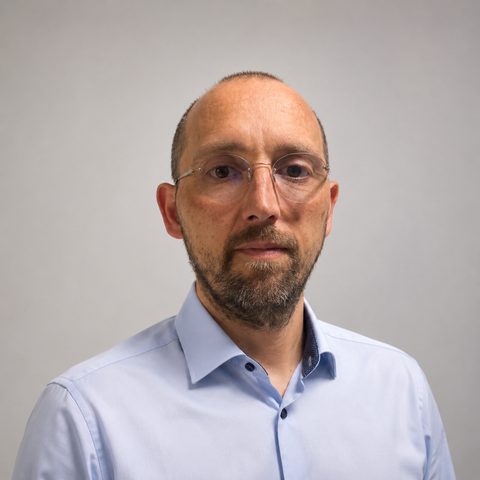
Business Transformation Architect
«How does this become a way of working for team and organisation?»
Since 2009, Andreas Hosang has supported companies and teams in complex change and delivery projects. In the training, he shows how the AI way of working can be embedded in the organisation and put into practice effectively in the company.
LinkedIn profileThis way, you learn not only what works technically, but also what makes sense in the project and how it can be put into practice in the company.
As all three trainers are on site for the whole day, there is plenty of room for individual questions and direct exchange, including personal conversations in between. That is exactly what matters to us. This training also came about because we enjoy working together and are convinced that project managers benefit from this combination of different perspectives.
Course content
From the basics of AI to embedding it in your own working environment.
The course day
One day, clearly structured and results-oriented: from the joint start to your personal next step.
Who it is for
The training is aimed at people with real project responsibility, regardless of whether they work in a traditional, hybrid or agile way. If you plan, coordinate, document or control in everyday project work, this is the right place for you. You should have project management experience. As the course is held in German, you should be able to follow it and take part in German.
For people who really hold projects together, especially in Swiss SMEs, where project managers often coordinate, document and control at the same time. The focus is not on the method, but on your work as a project manager or in the PMO: the AI ways of working taught can be transferred to traditional, hybrid and agile project environments. By PMO, we mean project-related functions such as reporting, coordination, documentation and support for project control. Portfolio management is not part of this training.
Methods and frameworks may come up as examples:
The training is less suitable if you work exclusively as a Scrum Master or Product Owner, are looking for a general introduction to AI without a project focus, or mainly want to learn a single application or a specific AI tool. This format is not designed for that.
Course dates
Registration for the course on 18 November 2026 closed on 28 October 2026. New dates will appear here as soon as they are confirmed. The group is deliberately kept small so that there is enough room for questions, practical work and discussion of concrete project situations.
The exact training venue in Zurich will be announced in good time before the training. Alternatively, request an in-house training.
Investment
Registration
No course date is currently open for registration. Leave your details and we will let you know, without obligation, as soon as a new date is confirmed.
Please note: the course is held in German. This form is in English for your convenience; the course itself is not.
In-house
If several project managers are to establish a shared AI way of working, we adapt the training to your project methods, templates, AI environment and organisational constraints.
In-house dates and capacity are confirmed individually once we have received your request.
Organiser & contact
Do you have questions about registration, an open course or an in-house training? Hosang Consulting will be happy to help.
For reference
This training is not a product course. You learn fundamentals, mental models and ways of working that can be transferred to different AI products and platforms. We deliberately distinguish between the underlying model and the product that makes this model usable with further functions. Products and model versions change quickly. The principles of good AI-supported project work are meant to last beyond that.
Questions & answers
Experience in one hands-on day how AI can give you concrete support, from project initiation to reporting and control.
Less administration. More time for real project control.